Explore
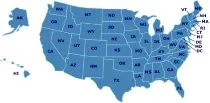
Legal Support
If you need legal information or have run into a legal situation regarding your decision to homeschool, these resources will be helpful.
What's Popular
The Lost Tools of Learning
Is not the great defect of our education today that although we often succeed in teaching our pupils "subjects," we fail lamentably on the whole in teaching them how to think: they learn everything, except the art of learning. Dorothy Sayers authored this essay in 1947, discussing a classical approach to education, with the recommendation to adopt a modified version of the medieval scholastic curriculum.
Record-Keeping & Organizing: 10 Reasons to Keep Records
Record-keeping is an important part of your homeschool. Barbara Edtl Shelton lists the benefits of keeping good records, including the greater ease of evaluating progress, helping to set the direction for your homeschool, helping to preserve memories for the future, and more.
The Art of Organizing Your Space
The furniture in your room is situated just right, yet it's cluttered with lots of paper, items taken from other parts of the house, too many knick-knacks, and trash particles that didn't quite make it to the trashcan. Shouldn't we be asking ourselves, "What's wrong with this picture?" Maybe you already know the answer. But then, why hasn't anything been done about it yet? Don't try to answer that. There's an art to approaching the task of getting organized.
The Lessons of H.R. 6
For eight days in February, 1994, the home schoolers of this nation gave Congress a lesson on the power of grassroots politics it is not likely to forget. It began when an amendment was introduced to H.R. 6, an enormous education reappropriations bill, which would have required all teachers in America to be certified in each and every course they teach. (See article on “The Battle of H.R. 6.”) This provision would have encumbered public schools—especially small public high schools. It would have seriously interfered with America’s private schools. But for home schools, the provision was the political equivalent of a nuclear attack. America’s home schoolers astonished Congress with a political counterstrike that was quick, effective, massive, and decisive. There are three central reasons why the home schooling community was able to respond in this manner.
African-American Home Schooling - Why Black Children Benefit From Home Schooling
With the educational landscape becoming more diverse in America, black parents are looking for better ways in which to teach their children. One of the new educational alternatives and the only one thus far exhibiting parity between the races is home schooling. Though many blacks are embarking on home schooling as a new educational choice, many don't fully know why home education tends to work for black children. This article will piece together clues that account for black children's affinity for learning at home.
JumpStart Math Activities
When it comes to math, a good foundation is essential. With these fun math activities for kids, numbers become friends and the basic foundation for the subject is established at an early age. Different math activities for kids of different age groups can be effective in teaching them basic but essential math concepts. Here are some interesting grade-based math activities that parents and teachers can use to make math a whole lot of fun!
Preschool Math Activities
Browse through our preschool math activities. Here are many preschool math activities to keep your preschooler learning on the fly, all year long.
Homeschooling Creatively
This list is a place where parents can come to understand and give value to our creative children as we home/unschool with them. The focus will be on discussing alternative ways (versus public school methods) to help our creative children learn which best suits their learning style and respects their complex personality traits, taking a look at creating a success-based learning environment that draws on the strengths of our creative learners while providing support-based opportunities to gently guide their intense natures.
How Do I know If I'm Qualified to Homeschool?
Parents considering homeschooling are understandably concerned about whether they are qualified enough. Do parents need to be trained and certified like public school teachers? How in the world can you be qualified to teach them? The most important thing to realize is that as a homeschooling parent, you're job is not necessarily to teach your children. Instead, you are there to help them learn.
Charlotte Mason Research Company
This website is owned by Karen Andreola, author of "A Charlotte Mason Companion." Includes information about her book and other books on Charlotte Mason.