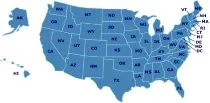
Twenty years ago, home education was treated as a crime in almost every state. Today, it is legal all across America, despite strong and continued opposition from many within the educational establishment. How did this happen? This paper traces the legal and sociological history of the modern home school movement, and then suggests factors that led to this movement's remarkable success.
Cheryl Seelhoff continues her look at the history of homeschooling by examining the importance of the HSLDA's response to H.R. 6, a House of Representatives bill addressing issues in elementary and secondary education. The HSLDA warned that this bill might require certification of home educating parents, in contrast to the opinions of other members of the homeschooling movement.
How homeschoolers interact with social media. Myths about using social media for marketing to the homeschool audience. Social media preferences for the homeschool market.
Patrick Farenga's discussion of the role John Holt played in the evolution of the homeschooling movement.
A look at what homeschoolers buy and different ways to reach the homeschool market.
This essay by Michael Farris outlines why it is so important to fight for homeschool rights.
This article, written in 1998 on the fifteenth anniversary of Home School Legal Defense Association (HSLDA), chronicles HSLDA’s growth.
The Homeschool Speakers and Vendors Association (HSVA) was originated and founded by Steve Clark, a homeschooling dad from Louisville, KY. From 1998 to the present, Clark also spent over 2000 hours working in homeschool booths and speaking at homeschool conventions all across the US and Canada. After meeting hundreds of other speakers and vendors at these conventions, Clark saw that there was a great need for an association that would provide support and assistance, mainly in the areas of compiling convention information and developing marketing resources. After brainstorming the idea with other vendors and speakers, Clark and his wife, Katrina, launched HSVA in 2003.
Home in education has been around as long as Adam and Eve. Adam and Eve had no teachers or school to send their children to, so they simply had to do it themselves. It has been the case during much of history that they were simply no schools to send children to, leaving parents with no alternative but to homeschool.
A media kit is a document you provide to potential advertisers and other parties you are interested in working with information about your value as a partner. It is meant to reflect your reach as a blogger. A media kit can be as simple as an ad page with basic blog and social media numbers or as complex as a full-blown demographic study of your readers printed and bound. Whatever kind of media kit you choose to create, remember to be clear and concise.
A look at the change in the homeschooling movement from an inclusive philosophy to a more structured, compartmentalized, and politicized structure.
Steve Moitozo explains how homeschooling is parents deciding and directing the education of their children—deciding and directing the education, not doing all the educating.
This is the final installment of Cheryl Seelhoff's series on the history of homeschooling in America.
Patrick Farenga looks at the history of homeschooling from before the founding of our country to present day. He includes discussion of the work of some important people in the homeschooling revolution.
House Resolution 6 of 1994 was a reappropriations bill for the Elementary and Secondary Education Act (ESEA). Ordinarily such bills deal with public education and would have little, if any, impact on home educators. But that year, a few small wording changes affected thousands upon thousands of home schooling families, and resulted in over a million phone calls to Congress.
For eight days in February, 1994, the home schoolers of this nation gave Congress a lesson on the power of grassroots politics it is not likely to forget. It began when an amendment was introduced to H.R. 6, an enormous education reappropriations bill, which would have required all teachers in America to be certified in each and every course they teach. (See article on “The Battle of H.R. 6.”) This provision would have encumbered public schools—especially small public high schools. It would have seriously interfered with America’s private schools. But for home schools, the provision was the political equivalent of a nuclear attack. America’s home schoolers astonished Congress with a political counterstrike that was quick, effective, massive, and decisive. There are three central reasons why the home schooling community was able to respond in this manner.
This is a great list of famous people who did their learning at home. Includes presidents, athletes, performers, scientists, artists, inventors, educators, writers, and entrepreneurs.
Explore some of the history of the homeschooling movement, why some parents choose to homeschool, the basics of homeschooling, and more. The article includes some homeschooling statistics and demographic information. Also included is a discussion of the influences of Dr. Raymond Moore and John Holt on the emerging homeschool movement.
Get tips on how to understand the homeschool market, how to do market research on a home business budget, and whether or not you should buy advertising.
Homeschoolers are actually not the easiest marketing targets in general. You might think that we are such a specific subset of the population that we basically have a marketing bullseye on our foreheads, but the truth is that people homeschool their children for such a wide variety of reasons that figuring out where we are coming from can be a full-time job in itself. The one thing homeschoolers DO have in common is their belief that by homeschooling, they are providing a customized education for their child.
 Skipping School: A History of American Homeschooling and How It Went Mainstream
 A Fun Homeschooling History Curriculum For Kids!: Ancient Civilizations Of The W...
 Habits for a Sacred Home: 9 Practices from History to Anchor and Restore Modern ...
 8th Grade History Workbook: Grade 8 US American World History Lesson Homeschool ...
 Mark Twain Understanding the US Constitution Workbook, American History Books Co...
 History Pockets: Ancient Civilizations, Grades 1-3
 Everything You Need to Ace World History in One Big Fat Notebook, 2nd Edition: T...